Quick answer
check your dog’s needs, lower the intensity of the surroundings and practise calm moments when your dog can already manage them. More activity is not always the missing ingredient.
Look at the whole day
An evening of pacing, jumping and toy-delivering can have several explanations. Your dog might need an appropriate activity, a toilet break, company, relief from something worrying—or an opportunity to rest. “Hyper” describes what you see, not the cause.
Make a simple timeline of walks, play, food, visitors and naps. Look for transitions that are consistently difficult. A dog who struggles after a noisy greeting needs a different starting plan from a dog with very little to do all day.
Create a predictable landing place
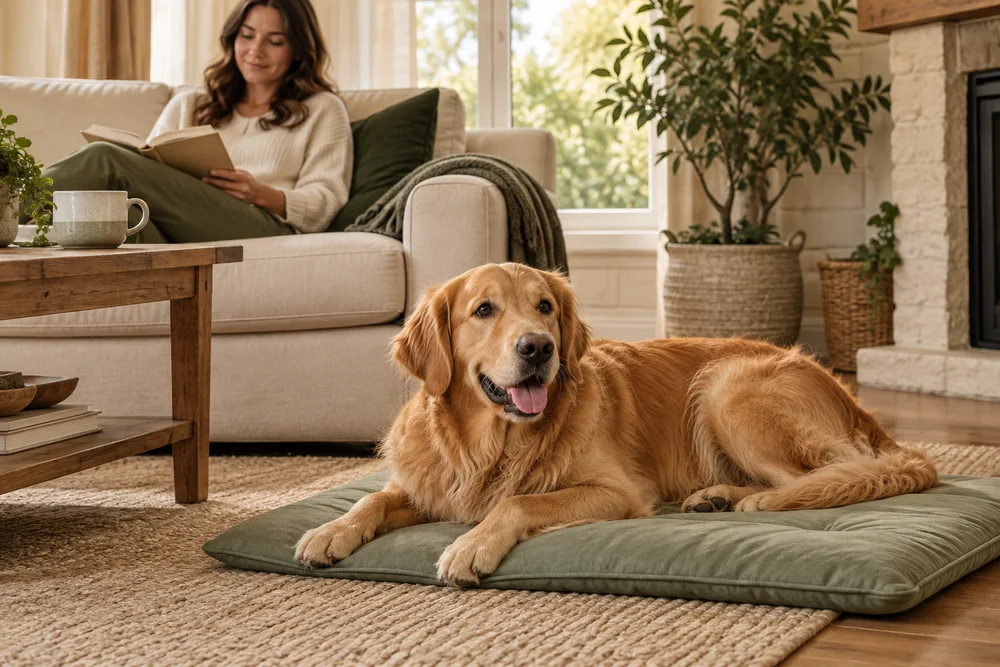
Choose a comfortable mat away from the front door and household traffic. Give your dog access to water and a suitable resting space. Avoid turning the mat into a place where they are constantly handled or disturbed.
Try a quiet transition: finish an activity, offer a toilet opportunity if needed, then move to a calm room. Keep your own movements ordinary. The goal is not to perform a dramatic “calm down” ritual but to make quiet time recognizable.
Practise noticing relaxation
Set aside a short, unhurried moment—not the peak of the evening zoomies.
- Sit near the mat with a few tiny rewards ready.
- Notice an easy first step: standing quietly near it or choosing to lie down.
- Place a reward gently rather than tossing it for a chase.
- As this becomes easy, notice softer behavior, such as a comfortable weight shift.
- End before your dog becomes frustrated or fixated on the food.
Dogs Trust’s settle guide describes building from quieter behavior toward relaxed posture, then gradually adding distractions. You do not need to demand a formal down-stay throughout the process.
Three common sticking points
The dog springs up after every treat. Try delivering it lower and more quietly, or practise at a different time. Do not keep feeding rapidly while expecting stillness to appear on its own.
The mat means “stare at me for food.” Reduce your involvement and reward naturally occurring rest elsewhere too. Comfort matters more than an impressive pose.
Visitors undo everything. Rehearse with a quiet adult at a distance, using a barrier if helpful. A busy gathering is a difficult first lesson.
When settling is the wrong goal
Do not require stillness when your dog is frightened, uncomfortable or urgently needs to toilet. Persistent restlessness, panting at rest, apparent pain or a sudden change warrants veterinary advice. Fear and aggression need qualified support.
Common questions
Should I tire my dog out first?
Appropriate movement and enrichment matter, but exhaustion should not be the target. Build a day that includes both activity and real rest.
How long should a session be?
Start with a few easy opportunities and stop while things are going well. The dog’s comfort is more useful than a timer.